A Technologically Complex Pressure Vessel for the Offshore Industry
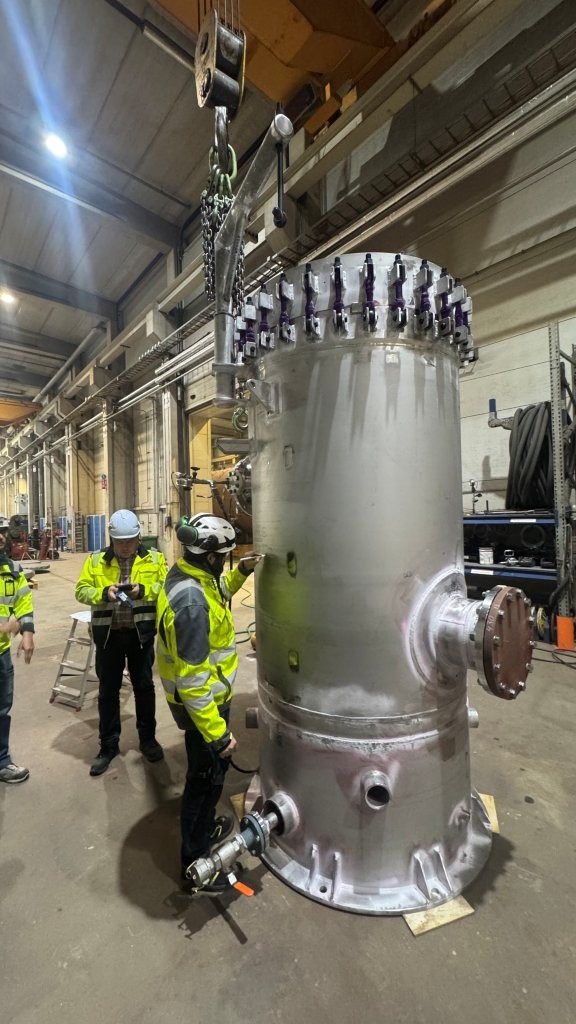
Estanc successfully completed a pilot project aimed at manufacturing a filtration unit used in the seawater injection process on an offshore oil platform. The unit will be deployed in the Gulf of Mexico, and the project was commissioned by the UK-based company Cleanova. The work was technically demanding, combining stringent requirements for engineering, welding technology, production and quality control into one integrated solution.
Complexity Begins with the Material
Manufacturing and welding super duplex stainless steel is a highly controlled process. The pressure vessel and its welds must withstand long-term mechanical loads as well as an aggressive marine environment.
Key steps included:
-The base material was produced by the steel manufacturer in accordance with ASME BPVC-II requirements.
-Estanc carried out the engineering and design in compliance with ASME BPVC-VIII.
-All welding technologies were implemented at Estanc under ASME BPVC-IX. Destructive testing and metallographic examinations were performed by an independent accredited laboratory.
-Continuous quality control was conducted during production in line with the welding procedures approved by the client and an independent inspection body.
-Ongoing inspections were carried out by an independent third-party inspector.
In addition, the project required meeting the client’s specific technical requirements and maintaining strict control over the entire production–assembly–welding process. Production approval was granted only after the complete qualification of the welding technology, verifying that all mechanical and metallurgical properties of the welds met the required standards.
Specific Requirements and Control at Every Stage
For this offshore client, Estanc had to comply not only with international standards but also with various additional requirements. This included demonstrating pitting corrosion resistance according to ASTM G48 methodology before welding procedure qualification and client approval.
The quality of every weld was verified through specific welding procedure tests in accordance with applicable standards and the end customer’s requirements. Only highly qualified assemblers and welders were authorized to work on the project. Welding was carried out using programmed parameters to ensure full traceability and compliance throughout the entire production chain.
Production involved, among other measures:
- a dedicated manufacturing area with positive pressure and controlled ventilation to prevent dust contamination of the weld pool;
- extended non-destructive testing (NDT) of welds;
- continuous measurement of weld ferrite content using a Ferritescope;
- client-authorized independent inspections at every production stage;
- chemical passivation after all welding and quality control processes to improve corrosion resistance of the welds;
- final safety certification of the pressure vessel by an ASME Authorized Inspector.
Smart Welding Equipment and Carefully Managed Processes
The welding work was carried out using TPS-400i intelligent welding systems, which automatically maintain parameters within prescribed limits. This prevents overheating or underheating and ensures a uniform, corrosion-resistant metallurgical structure after cooling.
FCAW was used for the main welds, while a combination of GTAW + FCAW was applied for the piping, ensuring consistent weld quality and high productivity.
Highly Qualified Welders and Assemblers
The project required welders not only to hold valid ASME IX certificates but also to have in-depth knowledge of duplex stainless steel metallurgy. Essential skills included extensive practical experience, a strong sense of responsibility and proficiency in operating advanced intelligent welding equipment.
Technical Differences Between European and American Standards
An additional challenge arose from the different approaches used in American (ASME) and European (EN-ISO) standards: ASME is strictly code-based, while EN-ISO is more flexible and engineering-driven. As Estanc’s engineering and production practices are primarily based on EN standards, the team had to address differences in terminology and technical definitions.
Although ASME and European standard organisations have been collaborating for years to harmonise requirements, the process is ongoing. Meanwhile, equipment, welding technologies and production practices continue to evolve rapidly.
Conclusion
The project demonstrated that such pilot initiatives are technically and practically feasible when engineering, detailed production management, continuous quality control and structured technical communication with the client and end customer are seamlessly coordinated.
The pilot project provided Estanc with valuable learning experience and elevated the company’s capabilities in manufacturing complex offshore equipment to a new level.